
Travel is often framed as a way to understand the world. We travel to learn, to decode cultures, to collect facts and stories we can later retell with confidence. Guidebooks promise explanations. Itineraries promise mastery. Social media rewards certainty: This place is like this. These people believe that.
But something quieter and far more transformative happens when you stop trying to explain the world while moving through it. When you loosen your grip on interpretation, travel stops being an intellectual exercise and becomes a lived experience. The world, it turns out, does not always want to be summarized. Sometimes it wants to be felt.
Visit: Christopher Loffredo
The Habit of Explaining Everything
Many of us arrive in new places carrying invisible notebooks. We label what we see. We compare it to home. We ask, why do they do this? What does this mean? This habit isn’t bad; it’s human. Explanation helps us feel oriented and safe.
Yet constant interpretation can become a barrier. When every moment is filtered through analysis, we miss the texture of the present. The smell of bread drifts through a narrow street. The rhythm of a language we don’t understand but somehow feel. The unremarkable kindness of a stranger who doesn’t fit into a neat narrative.
Explaining too quickly can flatten complexity. It turns living cultures into concepts and people into examples.
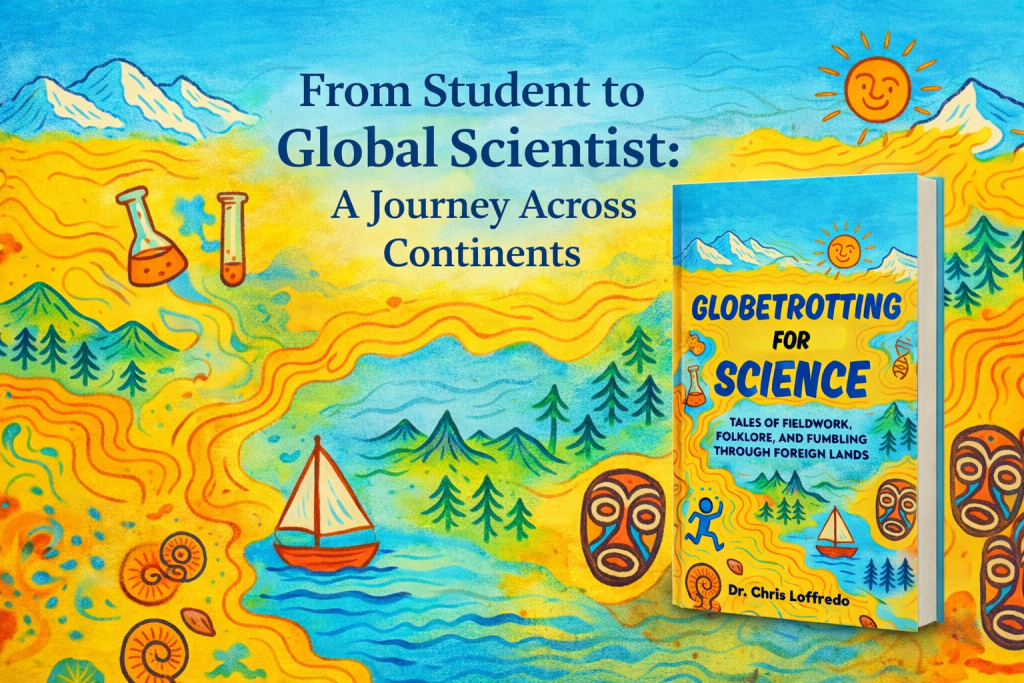
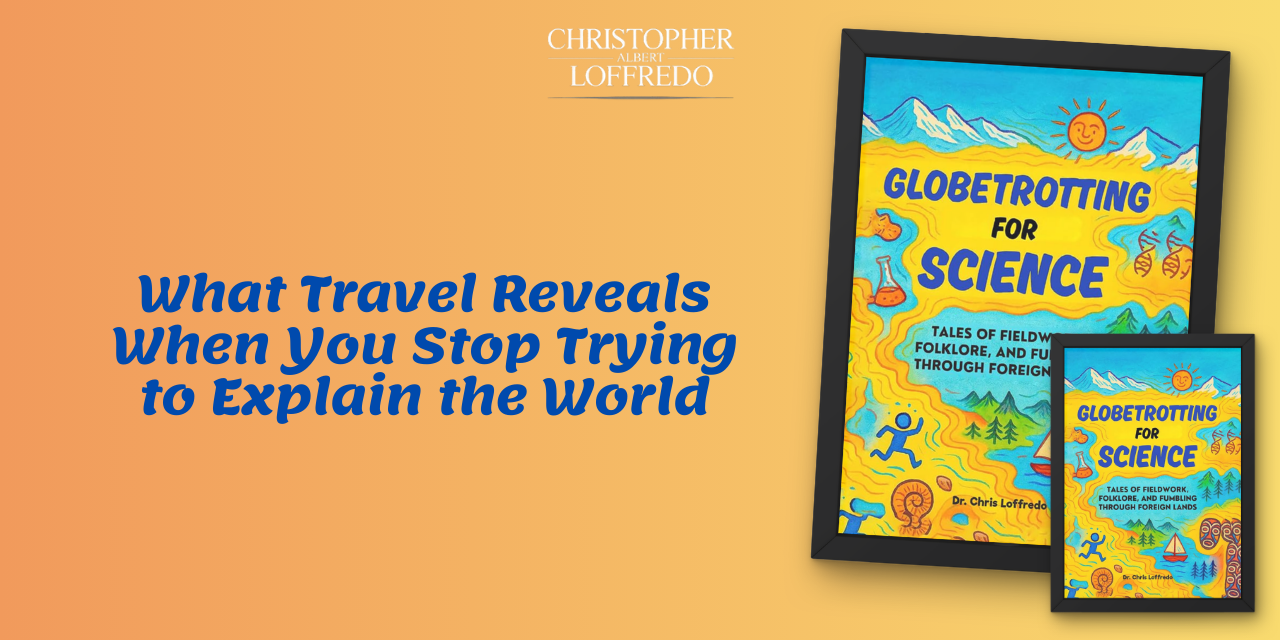
Amazon: Globetrotting for Science: Tales of Fieldwork, Folklore, and Fumbling through Foreign Lands
When Curiosity Replaces Conclusions
There’s a shift that happens when you travel without the pressure to “get it.” Curiosity replaces conclusions. Observation replaces judgment. Instead of asking What does this say about them? You begin asking What am I noticing right now?
You may never fully understand why a city wakes later than yours or why silence carries more weight in certain conversations. But you start to appreciate that not everything needs your interpretation to be valid. Some truths are experiential, not explanatory.
This kind of travel humbles the ego. It reminds you that understanding isn’t ownership.
Language as a Lesson in Letting Go
Nothing forces surrender quite like not speaking the language. At first, it feels frustrating to be reduced to gestures, smiles, and pauses. But eventually, something softens.
You learn to listen differently. Tone matters more than words. Facial expressions carry meaning. Silence becomes communicative rather than empty.
Without fluent language, you stop crafting clever responses and start paying attention. You become present in a way that explanation-heavy travel rarely allows. Meaning emerges not from words alone, but from shared moments of waiting, eating, walking, and laughing at misunderstanding.
The Beauty of Not Being the Expert
At home, many of us are competent, articulate, and informed. Travel strips that away. You are no longer the expert. You are the one asking basic questions, making small mistakes, and relying on others.
There is freedom in this. When you stop trying to explain the world, you also stop needing to perform intelligence or insight. You are allowed to be quiet. To be wrong. To simply exist in a place without narrating it.
This humility creates space for genuine connection. People respond not to your explanations, but to your openness.
Moments That Resist Meaning
Some travel moments refuse interpretation altogether. A long train ride through unfamiliar landscapes. A meal whose flavors you can’t name. A religious ritual you do not belong to but are allowed to witness.
Trying to explain these moments can feel like shrinking them. Their power lies in ambiguity. They stay with you not as lessons, but as impressions, emotional fingerprints rather than intellectual conclusions.
Travel teaches that not everything meaningful needs to be understood. Some things are valuable precisely because they remain unresolved.
How Travel Changes Your Relationship with Home
When you stop explaining the world abroad, you often return home seeing familiar places differently. You notice how much of your own culture you’ve taken for granted or oversimplified. You realize how often you explain others while leaving yourself unquestioned.
Travel does not make you more knowledgeable in the traditional sense. It makes you more aware of how partial your knowledge always is. That awareness fosters patience toward differences, contradictions, and even toward yourself.
Travel as Practice, Not Performance
In an age of travel content and instant sharing, it is tempting to turn every journey into a story with a takeaway. But some trips do not offer neat conclusions. They offer practice instead: the practice of attention, restraint, and presence.
When you stop trying to explain the world, travel becomes less about collecting insights and more about cultivating awareness. You learn how to sit with uncertainty. How to appreciate without possessing. How to listen without preparing a response.
The Quiet Revelation
The greatest revelation travel offers may not be about other places at all. It is about our own impulse to define, categorize, and conclude. When that impulse relaxes, the world feels wider, not because we understand more, but because we allow more to exist without explanation.
In that space, travel becomes less about knowing the world and more about meeting it. And sometimes, that’s enough.