

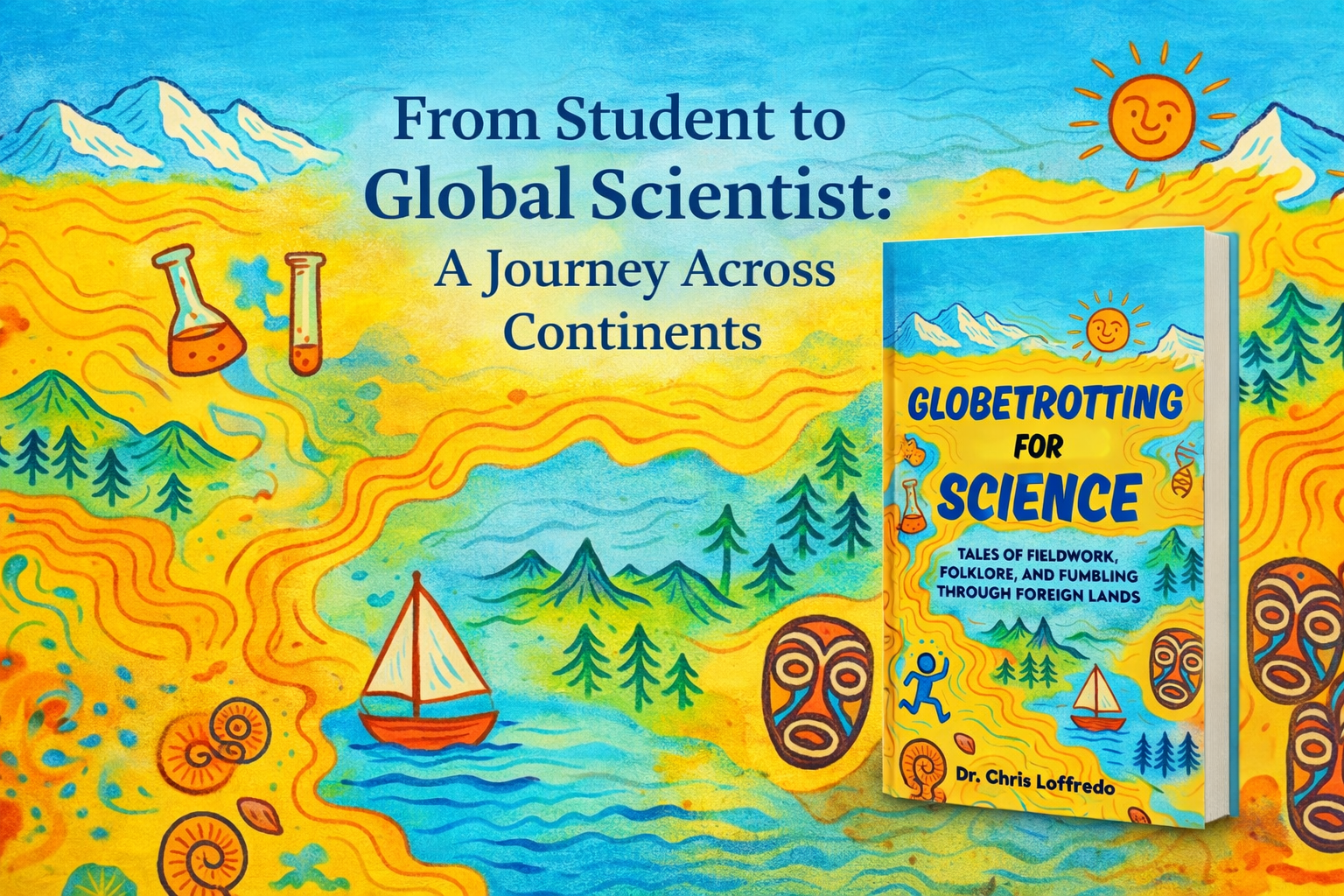
Introduction: Starting with Curiosity
Every scientific journey begins with a question. For some, it is a fascination with how animals behave; for others, a desire to understand patterns of disease or the forces shaping our environment. What starts as curiosity in a classroom or laboratory can evolve into a lifelong pursuit, one that stretches far beyond textbooks and into the wider world.
The path from student to global scientist is rarely straightforward. It is shaped by opportunities, challenges, and moments of discovery that occur both inside and outside formal education. Over time, curiosity becomes more than a starting point; it becomes a guiding force, leading researchers across continents and into experiences that transform not only their careers but also their perspectives on life.
Visit: https://christopherloffredo.com/
First Fieldwork Experience
For many scientists, the transition from theory to practice begins with their first fieldwork experience. It is often a defining moment, both exciting and intimidating. Armed with academic knowledge but limited real-world experience, the young researcher steps into an unfamiliar environment where conditions are unpredictable and outcomes uncertain.
The first days in the field can be overwhelming. Simple tasks may feel complicated, and the gap between classroom learning and practical application becomes immediately apparent. Weather conditions, equipment challenges, and unfamiliar surroundings test both patience and adaptability.
Yet it is within this uncertainty that true learning begins. Fieldwork teaches lessons that cannot be fully conveyed in lectures. It demands observation, resilience, and a willingness to adapt. Mistakes are inevitable, but they are also essential. Each misstep becomes an opportunity to refine skills and build confidence.
Over time, the field transforms from a place of uncertainty into a space of growth. The student begins to think like a scientist, not just applying knowledge, but generating it through experience. This shift marks the beginning of a deeper engagement with both science and the world.
Amazon: Globetrotting for Science: Tales of Fieldwork, Folklore, and Fumbling through Foreign Lands
Expanding into International Research
As experience grows, so do opportunities. What begins as local or regional fieldwork can expand into international research, opening doors to new environments and cultures. This transition is a pivotal stage in the journey from student to global scientist.
International research introduces a new layer of complexity. It requires navigating different languages, customs, and systems while maintaining scientific rigor. Collaboration becomes essential as researchers work with colleagues from diverse backgrounds to address shared questions.
These experiences broaden not only scientific understanding but also cultural awareness. A project conducted in one country may reveal insights that are shaped by local traditions, social structures, and environmental conditions. Engaging with these factors enriches the research process, highlighting the inter connectedness of science and society.
Traveling for research also exposes scientists to global challenges and issues such as public health, environmental change, and resource management that transcend national boundaries. Contributing to these efforts reinforces the sense that science is not just an academic pursuit, but a tool for addressing real-world problems.
Career-Defining Moments
Throughout a scientific career, certain moments stand out as turning points, experiences that shape direction and purpose. These may include a breakthrough discovery, a successful collaboration, or an unexpected opportunity that leads to a new area of research.
For many, one of the most significant transitions is moving between disciplines. Shifting focus from studying wildlife to addressing human health, for example, research can redefine the scope of work and open entirely new avenues for exploration. Such changes often require learning new methods, building new networks, and adapting to different research environments.
Career-defining moments are not always marked by success. Challenges and setbacks can be equally influential. A failed project, a difficult field experience, or an obstacle that requires reevaluation can lead to growth and new perspectives. These moments test resilience and encourage scientists to think creatively about their work.
Over time, these experiences accumulate, shaping a career that is both dynamic and evolving. They highlight the importance of flexibility and the willingness to embrace change, qualities that are essential for navigating the complexities of global research.
Lessons from Decades of Travel
A career that spans continents brings with it a wealth of lessons, many of which extend far beyond science. One of the most important is adaptability. Working in different environments requires the ability to adjust quickly, whether dealing with logistical challenges, cultural differences, or unexpected changes in research conditions.
Another key lesson is humility. Travel reveals the limits of one’s knowledge and perspective. No matter how experienced a scientist becomes, there is always more to learn from colleagues, from communities, and from the environments in which they work.
Long-term international engagement also fosters empathy. Interacting with people from diverse backgrounds provides insight into different ways of life, encouraging a deeper understanding of global issues. It highlights the importance of listening, respecting local knowledge, and approaching research with sensitivity.
Perhaps most importantly, decades of travel reinforce the idea that science is a shared endeavor. Progress depends on collaboration, communication, and mutual respect. The relationships built over time, whether with fellow researchers or local communities, become as valuable as the data collected.
Conclusion: A Journey of Growth
The path from student to global scientist is more than a professional trajectory; it is a journey of personal growth. It begins with curiosity and evolves through experience, shaped by fieldwork, travel, and the connections formed along the way.
Each stage of the journey brings new challenges and opportunities, from the uncertainty of first field experiences to the complexities of international research. Along the way, scientists develop skills and perspectives that extend far beyond their disciplines.
In the end, the true value of this journey lies not only in the knowledge gained but in the transformation it brings. It fosters resilience, empathy, and a deeper understanding of the world. It reveals that science is not confined to laboratories or borders, but is a global pursuit, one that connects people, ideas, and experiences across continents.


