

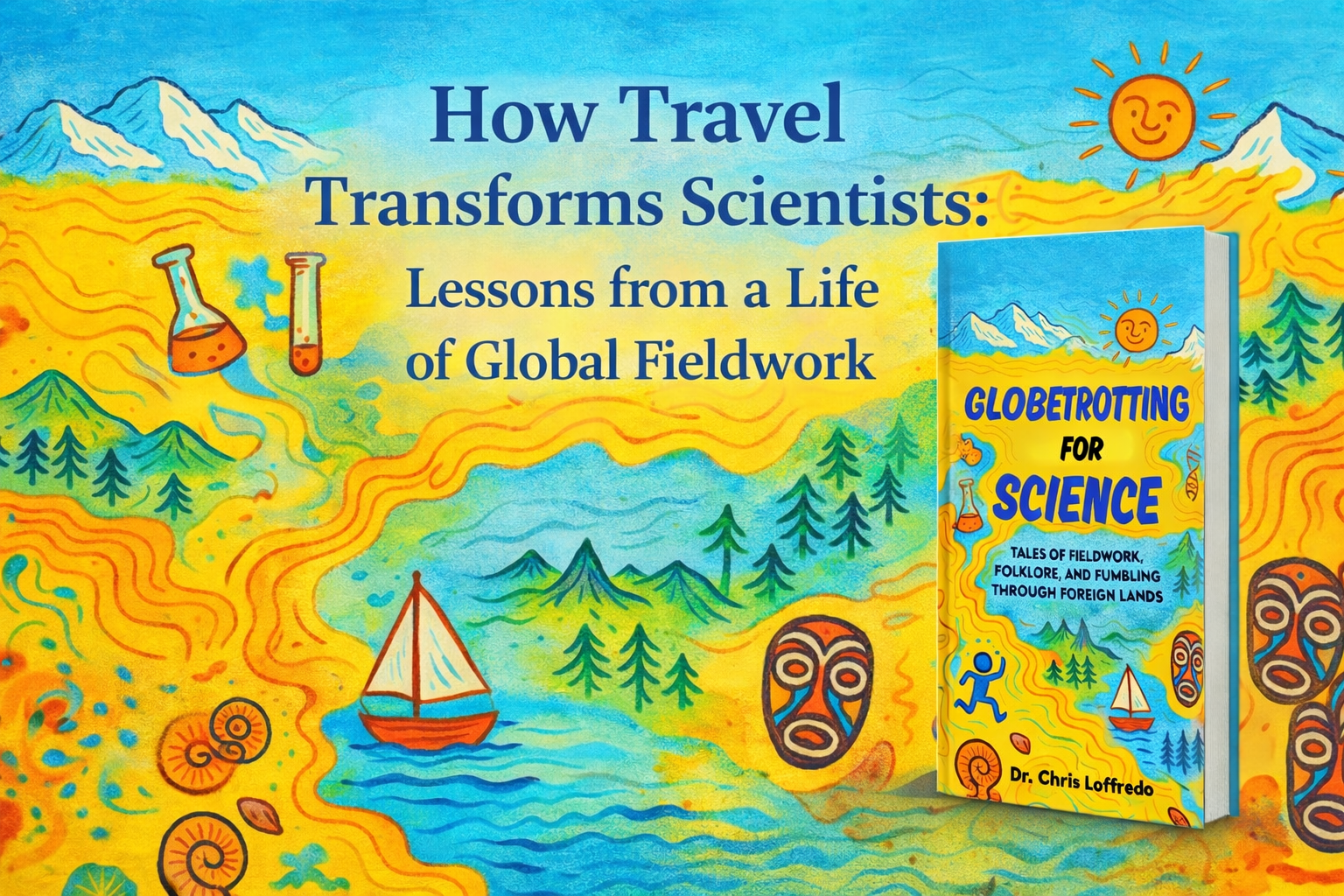
Introduction: Travel as a Catalyst for Growth
Travel is often seen as a leisurely pursuit, an opportunity to escape routines and explore new places. For scientists, however, travel is far more than a vacation. It is a catalyst for growth, a mechanism for learning, and a gateway to experiences that shape both professional and personal development.
Global fieldwork challenges assumptions, expands perspectives, and provides opportunities to engage with the world in ways that cannot be replicated in a classroom or laboratory. By stepping into unfamiliar environments, scientists encounter not only new ecosystems and research challenges but also the rich complexity of human cultures and societies. In this way, travel transforms scientists into more adaptable, empathetic, and insightful researchers.
Visit: https://christopherloffredo.com/
Early Experiences in Australia
For many scientists, formative experiences begin in relatively local settings. Australia, with its diverse ecosystems and unique wildlife, has long been a proving ground for young researchers. For a budding zoologist, it is a place where theoretical knowledge meets practical challenges, where observing a species in the wild demands patience, adaptability, and attentiveness.
Fieldwork in Australia often exposes early-career scientists to the unpredictability of research. Weather changes, difficult terrain, and the quirks of wildlife teach lessons that no textbook could. For example, observing bowerbirds constructing elaborate bowers or tracking the behavior of marsupials requires attention to subtle cues and a willingness to adapt in real time.
These early experiences also foster resilience. Scientists learn that mistakes are inevitable and that failure can be as instructive as success. A miscounted sample, a misidentified species, or a misread environmental signal becomes an opportunity for reflection, problem-solving, and growth. Through these challenges, the foundations of a lifelong approach to research are established.
Learning Through Cultural Immersion
Fieldwork is rarely limited to nature alone. Scientific travel invariably intersects with human communities, offering opportunities for cultural immersion and mutual learning. Living and working in different countries exposes scientists to diverse customs, languages, and worldviews, enriching both their personal and professional perspectives.
Cultural immersion teaches humility. A researcher may realize that local knowledge about ecosystems, weather patterns, or historical land use is often far more detailed and practical than any academic training can provide. Engaging respectfully with communities encourages collaboration, strengthens research outcomes, and deepens the scientist’s understanding of context.
Moreover, cultural experiences expand empathy. Sharing meals, celebrating local traditions, or simply navigating daily life in a foreign environment provides insight into the challenges and joys of human experience. These interactions highlight that science does not exist in isolation; it is embedded in the social, economic, and cultural fabric of the places it studies.
Professional Evolution Through Travel
As experience accumulates, travel often becomes central to a scientist’s professional evolution. Projects extend across countries and continents, encompassing collaborations with international colleagues, government agencies, and research institutions. This professional mobility transforms the scientist’s work from a local or regional focus into a global perspective.
For example, transitioning from zoology to epidemiology may shift the research from studying wildlife to studying human populations. Yet the principles of observation, data collection, and careful analysis remain constant. Travel enables access to diverse environments, from urban centers in developing countries to remote field sites, providing a comprehensive understanding of complex ecological and social systems.
Global fieldwork also opens doors to leadership opportunities. Experienced scientists may coordinate multinational research projects, mentor students abroad, and contribute to international policy discussions. Through these roles, travel directly shapes a career trajectory while broadening the scientist’s impact on global knowledge.
Key Life Lessons
Decades of travel and fieldwork impart lessons that transcend professional expertise. One of the most important is adaptability. Conditions are rarely predictable, and the ability to adjust to unforeseen challenges, whether logistical, environmental, or social, is essential.
Patience is another crucial lesson. Observing wildlife, waiting for data to materialize, or navigating bureaucratic hurdles requires a calm, measured approach. The ability to wait, watch, and respond thoughtfully enhances both research and interpersonal interactions.
Humility emerges from recognizing one’s limitations. Scientists often enter environments with assumptions, only to discover that local knowledge, cultural context, and the complexities of natural systems exceed what they initially understood. Accepting this reality fosters respect and openness to learning.
Finally, empathy and cross-cultural understanding become central to the scientist’s perspective. Interactions with colleagues, collaborators, and local communities reveal the universal elements of human experience, reminding researchers that their work is ultimately connected to people and places in profound ways.
Amazon: Globetrotting for Science: Tales of Fieldwork, Folklore, and Fumbling through Foreign Lands
Conclusion: Why Travel Matters
Travel transforms scientists by expanding both their professional and personal horizons. Fieldwork in diverse environments cultivates resilience, patience, and adaptability, while cultural immersion fosters humility, empathy, and a nuanced understanding of context.
Through decades of global engagement, scientists learn that knowledge is not only about data but about connection with ecosystems, with communities, and with the world at large. The lessons gained through travel are enduring: they shape research methods, influence collaborations, and guide ethical decision-making.
Ultimately, travel is more than a means to collect samples or observe phenomena; it is a tool for growth, shaping scientists into more effective researchers and more thoughtful global citizens. By venturing across continents, scientists discover not just the world around them, but the deeper capacities within themselves.